الثلاثاء، 7 يناير 2014

Information Systems: Concepts and Definitions


As we all know, the main purpose of information systems is to process data into knowledge and get the right information to the right people at the right time in the right amount and in the right format. IS (information systems) has many terms, data and knowledge. We'll go through them in this post.


A Business Process: a collection of related activities that produce a product
or a service of value to the organization, its business partners, and/or its customers.

Business Process Management: a management technique that includes methods and
tools to support the design, analysis, implementation, management, and optimization
of business processes.


Data Items: description of things, events, activities, and transactions that are recorded, classified, and stored but not organized to convey any specific meaning. Data can be numbers, letters, figures, sounds or images.


Information: data that have been organized so that they have meaning and value to the recipient. For example, a result of exam for a student is data, but Ahmed result of exam is information.

Knowledge: is the information or data that have been organized and processed to convey understanding, experience, and expertise as they apply to a current business problem.


Information Technology Architecture: a high-level plan or map of the information assets in an organization. It’s a guide for current operations and a blueprint for future directions.


Information Technology Infrastructure: consists of the physical facilities, IT components, IT services, and IT personnel that support the entire organization.


IT components: consist of hardware, software, telecommunications and networks, and wireless communications.

IT services: consist of data management, managing security and risk, and systems development.
IT personnel use IT components to produce IT services.
IT components are basically synonymous with the IT platform.
IT infrastructure consists of IT components, IT personnel, and IT services.


Business Pressure: The business environment is the combination of social, legal, economic, physical, and political factors that affect business activities.
Significant changes in any of these factor are likely to create business pressure on the organization.
The three types of business pressures faced are: market, technology, and societal pressures.
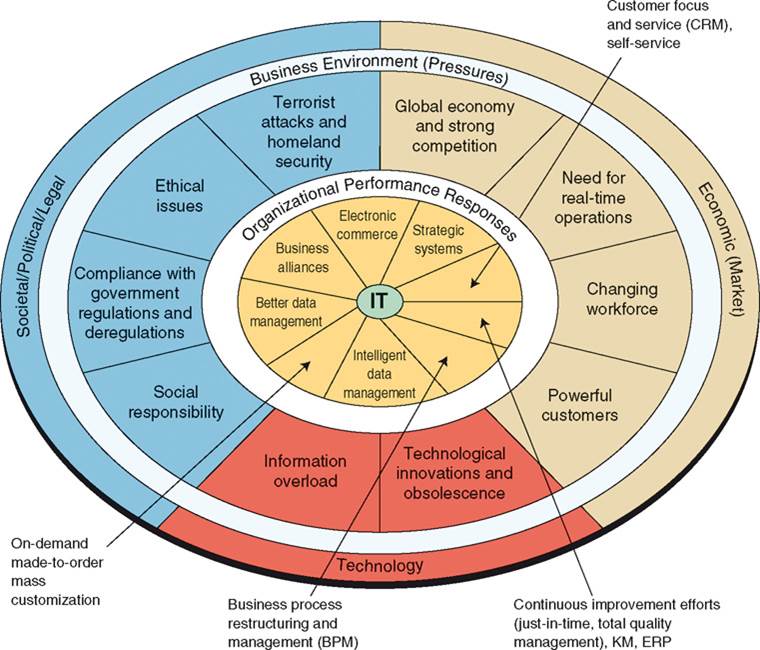


Market Pressures:
-The global economy and strong competition
- The changing nature of the workforce
- powerful customers

Technology Pressures:
- Technological Innovation and Obsolescence
- Information Overload

الأحد، 5 يناير 2014

what is information technology?

what is IT ???!


Information technology (IT) is the application of computers and telecommunications equipment to store, retrieve, transmit and manipulate data often in the context of a business or other enterprise.


for more iformation about it show the video:
http://www.youtube.com/watch?v=eCUI8ShT3kI

Samsung unveiles 110-inch ultra-HD TV worth $150,000

 
Samsung has another product to boast in the technology market and HD TVs. The giant Korean firm has launched the world’s biggest home TV with its massive 110-inch TV that is worth $150, 000.
South Korea Samsung New TV
Measuring 2.6 meters by 1.8 meters, the new Samsung HD TV known as “4K” has four times more pixels than the standard HD TV with the use of OLED. OLED has ultrathin screens that display more detailed images with promising picture clarity and impressive color saturation.
The screen is so big that audience will feast over the almost life-size images of players in a football match plus a cinema experience right in your living room. It also offers MultiView which allows two people to watch different shows at the same time.
article-2412193-1BA30B03000005DC-942_634x386
While Samsung and LG struggles to put OLED TVs into the mainstream by producing larger and affordable televisions, rival groups Sony and Panasonic ended their partnership with OLED. This move is also an answer to the call for more U-HD TV especially by the Chinese, who serve as South Korea’s major market.
The Samsung 110-inch U-HD TV will be available in China, Europe and Middle East. It is priced the same as the average price of a Korean TV, at 160 million won or $152, 000.

CES to spotlight startups and entrepreneurs

CES to spotlight startups and entrepreneurs
The 2014 International CES will spotlight the promise, power and future of technology through innovative startups and entrepreneurs.
The Consumer Electronics Association (CEA) today announced new areas and events at CES dedicated to the startup community, including the Indiegogo Zone and UP Global LIVE Stage.
Owned and produced by CEA, the 2014 CES, the world’s gathering place for all who thrive on the business of consumer technologies, will run January 7-10, 2014 in Las Vegas, Nevada.
“CES is a platform for innovators, big or small, who come to CES to take their business to the next level,” said Karen Chupka, senior vice president, International CES and corporate business strategy, CEA. “Startups are attending and launching their products at CES in ever-growing numbers, underscoring CES’ importance as the proving ground for innovators in consumer technology. We’re thrilled to bring new areas and events to the show floor that showcase these entrepreneurial companies and their groundbreaking innovations and provide them access to potential customers, partners, and investors as well as the global media.”
The all-new Indiegogo Zone, housed within the Eureka Park TechZone, will feature hardware campaigners from around the world. These innovators will showcase products and share experiences about raising funds on Indiegogo. The Indiegogo Zone provides an opportunity for anyone interested in learning more about crowdfunding for hardware.
The UP Global LIVE Stage, sponsored by GE, will showcase the startup community, facilitate connections and provide programming in Eureka Park. The stage will feature panels with iconic entrepreneurs, leading investors, corporate executives and media. In addition to programming, UP Global will host mentor sessions and pitch competitions and provide resources and networking opportunities for exhibitors and attendees.
The second annual ShowStoppers Launch.it power session is a curated pitch event built exclusively for the young, transformative and entrepreneurial startups that exhibit in Eureka Park. Sixteen exhibitors will pitch to a panel of high profile angel/VC investors along with media, analysts and industry experts in the audience.
An anchor for the startup community at CES, the 2014 Eureka Park TechZone will feature more than 200 exhibitors, 30 percent more than the 2013 CES. In partnership with UP Global, the National Science Foundation (NSF), General Electric (GE) and AT&T, Eureka Park provides a stage for new companies with technologies to market their innovation to venture capitalists, media and buyers. Eureka Park will have a French pavilion for the first time with UbiFrance bringing 11 French startups to the area.
Building off the success of Eureka Park, the new Eureka Park: NEXT hosts the progressing stage of Eureka Park startups. This TechZone is designed for mid-stage startups that have launched a product in the past year. In Eureka Park: NEXT, retailers, venture capitalists, manufacturers and more will discover established startups looking to expand their growth.
Floored within Eureka Park, Academia Tech focuses on the technologies coming from colleges and universities. CES also offers special networking events curated for startups and entrepreneurs like the invitation-only Entrepreneurs Reception and Tech Cocktail’s Startup Night.
The 2014 CES will feature more than 3,200 exhibitors unveiling the latest consumer technology products and services across 15 product categories. For more information on the 2014 International CES, visit CESweb.org

الأربعاء، 15 مايو 2013

IPOD TOUCH

IPOD TOUCH


The more advanced we made it, the funner it got.

Fun was built into every millimeter of the new thinner, lighter iPod touch. It does more than ever, more powerfully than ever, from playing games to playing music to just playing around. And everything looks tremendous on the 4-inch Retina display.


It’s the thinnest, lightest iPod touch ever.

For the first time, iPod touch is made from the same kind of anodized aluminum used in the MacBook line. And it’s made the same way too: By machining the enclosure from a single piece of aluminum. The first thing you'll notice about iPod touch is its barely-there weight. Then its supersmooth finish. Then all those Apple details — like the highly polished beveled edges. And iPod touch is made from one of the strongest grades of aluminum there is. Which means that it not only looks and feels incredible, it’s tough enough to tag along on more than a few crazy nights out.

iPod touch doesn’t just come in color. It’s practically made of color.

There’s a reason these iPod touch colors are so incredibly rich and vibrant. It’s because they’re bonded right to the aluminum — not just painted on the surface. So you see saturated color that still lets the luster of the metal shine through. Which gives you a material that shows off the color, and a color that shows off the material.


التكنولوجيا في مجال التعليم

التكنولوجيا في مجال التعليم

أصبحت التكنولوجيا في مجال التعليم أمراً لابد منه حتى يتوافق مع تطور المجالات الأخرى كالهندسة والدفاع والطب والفضاء والزراعة وعلوم العصر الحديث. فقد شهد مجال التعليم طفرة عظيمة في أواخر القرن العشرين إلا انه أخذ يتجه منحنا واسع الأبعاد في بداية القرن الحالي. وتسابقت مؤسسات التعليم بنوعيها الحكومي والخاص في الاتجاه لإيجاد وتوفير الوسائل الفعالة التي تساعد الطالب على التعلم بسهولة وتوفر له القدرة على الإبداع بشكل فعال في الدراسة وفي عمله المستقبلي. وتشمل وسائل التعليم الحديث الحاسب الآلي، والأقراص التعليمية المضغوطة (CDs)، والانترنت كبحر معلوماتي ووسيلة تعليمية عظيمة، ووسائل الإعلام السمعية والبصرية كالتلفزيون والفيديو وغيرها من الوسائل الحديثة. فكما غيرت التكنولوجيا القطاعات الأخرى، استطاعت وسائلها المتنوعة تغيير دفة التعليم وطريقة التعلم في العصر الحديث.
قبل أن نتطرق في الحديث عن أهمية التكنولوجيا في مجال التعليم، لابد من معرفة المقصود ب"تكنولوجيا التعليم" ومقتضاتها. تعرف "تكنولوجيا التعليم" بأنها وسيلة أو عملية متكاملة تشترك فيه نظريات تربوية، وأفكار، وتطبيقات يتم عن طريقها محاولة إدخال وسائل تكنولوجية حديثه بحيث تتوافق وأهداف التعليم المتمثلة في تطوير وتسهيل التعليم، وإيجاد حلول مجدية لمشاكل وصعوبات التعليم التي تواجه المعلم والطالب. فعندما تتفاعل وسائل التكنولوجيا كأجهزة الحاسب الآلي والانترنت في إثراء التعليم تصبح عملية التعليم مبسطة وسهلة بحيث يسمح بكل سهولة للعاملين في مجال التعليم للتغلب على تلك المشاكل التي تواجه التعليم.

ولو تطرقنا إلى أهمية التكنولوجيا في مجال والتعليم لوجدنا أن هذه الأهمية تزداد عام تلو الآخر. فاليوم، بسبب كون عالمنا عالما ثنائي سريع التغير والتطور، لذا توجب على المختصين في مجال التعليم أن يخاطروا في تفكيرهم المبدع لبناء سياسة تعليمية دائمة مربوطة مع التكنولوجيا الحديثة. و يجب أن لا يطوّرون قدرتهم فقط للنجاة من عصر معلومات رقمي متقلّب جدا، لكن عليهم أن يهزموا تلك التحديات المرافقة لها أيضا. ولقد شهد أواخر القرن الماضي بداية اتجاه سريع نحو توجيه استخدام الحاسب الآلي في دول العالم المتقدمة، تبعه دخول الانترنت في مجال التعليم في الجامعات والمؤسسات التعليمية المختلفة، فنتج بذلك بيئة حية قادرة على خلق جو نظيف و شاسع لاستخدام التكنولوجيا في تلك المراكز والمؤسسات التعليمية. 
ويمكن التعريف بالدور الذي يمكن أن تلعبه التكنولوجيا في مجال التعليم على النحو التالي:

1- تلعب التكنولوجيا دور المرشد الذي يساعد المعلم في توجيه المادة العلمية للطالب ويبدل من الطريقة التقليدية للتعليم في شرح الدرس وتقديم المعلومة. فالتكنولوجيا-بجميع وسائلها المتطورة- ببساطه تستطيع أن تغير بشكل الجذري المستوى التعليمي الخاص بالمعلم وقدرته في كيفية تقديم المنهج للطالب على نحو يعطي فرصة أكبر وأسهل في الفهم وتلقي الدروس. وهذا بدوره سيعكس مدى قدرة الطالب على تنمية قدراته الذهنية والفكرية في التعلم، وصقل مواهبه وامكاناته الإبداعية في دراسته ونشاطاته المدرسية.

2- إن وسيلة تعليمية حديثة كالكمبيوتر يكون محط أنظار الطلبة لاستخدامه في مجال التعليم واتخاذه كمرشد او معلم اليكتروني مساعد يرشدهم ببرامجه المتنوعة ووظائفه المختلفة في مجال التعلم واكتشاف المواهب الجديدة وتنمية القدرات العقلية في مختلف المواد الدراسية والتعليمية. كذلك تفتح الانترنت بابا جديدا يساعد الطلبة في الفصل الواحد أن يشتركوا في أنشطة تعليمية مختلفة في مجال البحث وتبادل المعلومات من خلال هذه الأنشطة.

3- توفر التكنولوجيا مصدرا غزيرا من المعلومات التي يحتاج لها المعلم والطالب على حد سواء. فقد أصبحت الانترنت بحرا واسعا يحتوي على معلومات وافرة كالموسوعات والقواميس والخرائط وغيرها من المصادر المعلوماتية التي يصعب الحصول عليها بالطرق التقليدية في البحث. ففي الوقت الذي يستغرق فيه المعلم أو الأستاذ أياما في بحثه عن معلومات ما في موضوع معين، تقطع الانترنت وقتا لا يزيد الساعات(أو حبذا دقائق) في الحصول على تلك المعلومات بصورة سهلة دون إجهاد.

4- التكنولوجيا كمصدر للتخاطب فتحت فرعا واسعا أصبح فيه المعلم والطالب في اتصال متواصل عن طريق التحدث عبر شبكة الانترنت. ففي حين يكون فيه المعلم قاعدا أمام جهازه الالكتروني، يستطيع الطالب أن يتخاطب مع معلمه في المنزل عبر شبكة الانترنت فيكونا بذلك قد حققا وسيلة جديدة في التخاطب، وفتح بابا للتواصل والتناقش فيما يهم الطالب في دراسته. كذلك يستطيع الطلبة أن يتخاطب ويتواصل بعضهم بعضا فيما يتعلق بواجباتهم المدرسية أو بحوثهم العملية. فهناك أيضا تصبح الانترنت وسيلة اتصال بين المعلم والمدرسة، وبين المعلم وغيره من المعلمين.

5- إن هذا التوسع والانفجار المعلوماتي الكبير في مجال التكنولوجيا يجعل تعدد وسائل التعليم تعددا واسع النطاق، وذو وظائف مختلفة في تأثيرها الايجابي في طريقة التعليم والبحث عن المعلومات. إذ تختلف وسائل التعلم في مواصفاتها وتقنيتها وقدرتها في مجال التعليم. فهناك القرص أو السيدي التعليمي الذي يحتوي على مادة علمية يستطيع الطالب أن يستخدمها في بيته بنفسه، فهو بذلك قد حقق طريقة من طرق التعلم الذاتي. وهناك أيضا الانترنت حيث تتعدد المواقع التعليمية وتتنوع المعلومات ومصادرها المختلفة.

6- وأخيرا، إن ارتباط التكنولوجيا بالتعليم في المدراس أصبح أمر لابد منه ولا مناص من تخطيه. إذا يجب أن يهيأ الطالب لمواجهة العالم الحقيقي المليء بالتقلبات التكنولوجية والتقنية الحديثة بعد تخرجه من المدرسة. فلقد أصبحت معظم قطاعات العمل الحكومية والخاصة تتطلب خبرة ومهارة في استخدام وسائل التكنولوجيا الحديثة منها الكمبيوتر. لذلك أصبحت تهيئة الطالب في دراسته في مجال التكنولوجيا نقطة مهمة حتى تهديه وتهيئه للدخول إلى عالم تكنولوجي يعمل بطاقة الإنسان وينطق باسم علم التكنولوجيا الحديثة

Types of Information Systems

Types of Information Systems

Computer-based information systems (CBIS) use computer technology to perform some or all of their tasks and are composed of:

Hardware is a device such as a processor, monitor, keyboard or printer.
Software is a program or collection of programs that enable hardware to process data.
Database is a collection of related files or tables containing data.
Network is a connecting that permits different computers to share resources.
Procedures are the set of instructions about how to combine the above components in order to process information and generate the desired output.
People are those individuals who use the hardware and software, interface with it, or uses its output.
An application program is a computer program designed to support a specific task, a business process or another application program.
Breadth of Support of Information Systems
Functional area information systems support particular functional areas in an organization.
Enterprise resource planning systems tightly integrate the functional area information systems via a common database.
Transaction processing systems support the monitoring, collection, storage, and processing of data from the organization’s basic business transactions.
Interorganizational information systems connect two or more organizations.  Examples are supply chain management systems and electronic commerce systems.